1. Ethane Detection: Ethane-consuming archaea can sense the presence of ethane in their environment through specific sensory proteins or receptors. These proteins detect ethane molecules and trigger a signal transduction pathway.
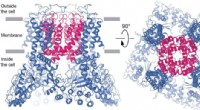
2. Expression of Ethane MMO: Upon detecting ethane, the archaeal cells initiate the expression of the genes encoding ethane MMO. Ethane MMO is a membrane-bound protein complex consisting of three subunits: a large alpha subunit, a small beta subunit, and a membrane anchor subunit.
3. Membrane Integration: The ethane MMO subunits are synthesized and transported to the cytoplasmic membrane of the archaeal cell. The membrane anchor subunit helps in the integration of the ethane MMO complex into the membrane, forming a functional enzyme.
4. Ethane Binding: The active site of the ethane MMO complex contains a metal center, typically copper, that binds to ethane molecules. The ethane molecule is oriented in a specific manner within the binding pocket to facilitate the subsequent reaction.
5. Ethane Oxidation: Once ethane is bound to the ethane MMO, it undergoes oxidation, the first step in its metabolic breakdown. The copper center of the enzyme activates molecular oxygen, which reacts with ethane to form an ethane hydroxyl radical. This reaction initiates the conversion of ethane into other downstream products, such as acetate and carbon dioxide.
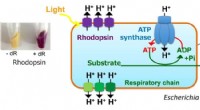
6. Proton Pumping: During ethane oxidation, the ethane MMO complex also functions as a proton pump. As the ethane hydroxyl radical is formed, protons (H+) are released into the periplasmic space outside the cytoplasmic membrane. This proton translocation creates an electrochemical gradient across the membrane, which is essential for energy conservation.
Overall, the ethane-consuming archaea employ the ethane MMO protein complex to selectively transport and metabolize ethane. This specialized mechanism enables them to thrive in environments where ethane is present, utilizing it as their primary energy source.