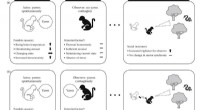
Animals can use iridescent colors to communicate in a number of ways. For example, some birds use iridescent colors to attract mates. The male peacock, for example, has a long, iridescent tail that he fans out during courtship displays. This tail is thought to be a signal of the male's health and fitness, and it is likely to be more attractive to females.
Other animals use iridescent colors to warn predators. The iridescent colors of some species of butterflies, for example, are thought to be aposematic, meaning that they serve as a warning to predators that the butterfly is poisonous. Similarly, the iridescent colors of some species of fish are thought to be aposematic, warning predators that the fish are armed with sharp spines or teeth.
Animals can also use iridescent colors to camouflage themselves. The iridescent colors of some species of fish, for example, are thought to help them to blend in with their surroundings and avoid predators. Similarly, the iridescent colors of some species of moths are thought to help them to camouflage themselves from birds.
Overall, iridescent colors can play an important role in animal communication. They can be used to attract mates, warn predators, and camouflage animals from their enemies.