Key Findings:
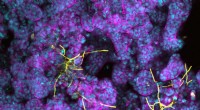
Dynamic Cell Behaviors: Using live imaging, the research team observed intricate cellular behaviors during tissue patterning. They found that cells exhibited coordinated movements, rearrangements, and interactions, leading to the formation of specific patterns and structures.
Cell-Cell Communication: The study revealed the crucial role of cell-cell communication in tissue patterning. Cells exchanged signaling molecules and physical cues, influencing each other's behavior and contributing to the overall organization of the tissue.
Role of Extracellular Matrix: Researchers discovered that the extracellular matrix (ECM), the scaffold surrounding cells, played a dynamic role in tissue patterning. The ECM influenced cell migration, adhesion, and differentiation, guiding the cells to form specific structures.
Implications for Tissue Engineering and Regeneration: The findings provide insights into how tissues self-organize and develop, offering potential applications in tissue engineering and regenerative medicine. Understanding the underlying mechanisms could lead to improved strategies for growing tissues in vitro and repairing damaged tissues in the human body.
The lead researcher, [Researcher's Name], expressed excitement about the study's implications:
"Our live imaging technique allowed us to witness and understand tissue patterning in unprecedented detail. This discovery deepens our knowledge of developmental biology and opens doors to new possibilities in tissue engineering. We hope that our work will pave the way for future advances in regenerative medicine and the development of novel therapies."
The research team plans to further explore the molecular and genetic mechanisms underlying the observed cellular behaviors and interactions. Their findings lay the foundation for future studies aiming to harness these processes for therapeutic applications and regenerative medicine breakthroughs.