Antibiotic resistance is a major public health threat. Bacteria that are resistant to antibiotics can cause infections that are difficult or impossible to treat, leading to longer hospital stays, higher medical costs, and even death.
One way that bacteria can become resistant to antibiotics is through mutations. Mutations are changes in the DNA of an organism. Some mutations can give bacteria the ability to survive in the presence of antibiotics that would normally kill them.
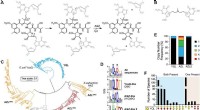
Scientists are using neutrons to study how mutations lead to antibiotic resistance. Neutrons are subatomic particles that are found in the nucleus of an atom. They can be used to probe the structure of atoms and molecules, including the DNA of bacteria.
By studying the structure of DNA, scientists can identify mutations that give bacteria antibiotic resistance. This information can then be used to develop new antibiotics that are effective against resistant bacteria.
How Neutrons Are Used to Study Antibiotic Resistance
Neutrons are used to study antibiotic resistance in a variety of ways. One common technique is called neutron scattering. Neutron scattering experiments can provide information about the structure and dynamics of DNA. This information can be used to identify mutations that give bacteria antibiotic resistance.
Another technique that uses neutrons to study antibiotic resistance is called neutron activation analysis. Neutron activation analysis can be used to measure the concentration of elements in a sample. This information can be used to identify bacteria that have accumulated high levels of antibiotics. Bacteria that have accumulated high levels of antibiotics are more likely to be resistant to those antibiotics.
Neutron Scattering Experiments
Neutron scattering experiments are performed using a neutron beam. A neutron beam is a stream of neutrons that is produced by a nuclear reactor or a neutron source. The neutron beam is directed at a sample of bacteria. The neutrons interact with the atoms in the sample, and the scattered neutrons are detected by a detector.
The data from a neutron scattering experiment can be used to determine the structure and dynamics of the DNA in the sample. This information can be used to identify mutations that give bacteria antibiotic resistance.
Neutron Activation Analysis
Neutron activation analysis is performed using a neutron beam. The neutron beam is directed at a sample of bacteria. The neutrons interact with the atoms in the sample, and the atoms become radioactive. The radioactive atoms emit gamma rays, which are detected by a detector.
The data from a neutron activation analysis experiment can be used to measure the concentration of elements in the sample. This information can be used to identify bacteria that have accumulated high levels of antibiotics. Bacteria that have accumulated high levels of antibiotics are more likely to be resistant to those antibiotics.
Conclusion
Neutrons are a powerful tool for studying antibiotic resistance. Neutron scattering experiments and neutron activation analysis can provide information about the structure and dynamics of DNA and the concentration of elements in a sample. This information can be used to identify mutations that give bacteria antibiotic resistance and to develop new antibiotics that are effective against resistant bacteria.