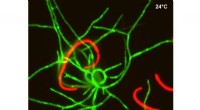
Protein folding is the process by which a protein molecule assumes its functional shape. This process is driven by a number of forces, including hydrophobic interactions, hydrophilic interactions, and van der Waals forces.
The mechanical forces that drive protein folding can also play a role in metastatic cancer. Metastasis is the process by which cancer cells spread from their primary site to other parts of the body. This process involves a number of steps, including cell detachment, migration, and invasion.
Cell detachment
Cell detachment is the process by which cancer cells break away from the primary tumor. This process can be driven by a number of factors, including the action of proteolytic enzymes and the loss of cell-cell adhesion molecules.
The mechanical forces that drive protein folding can also contribute to cell detachment. For example, the hydrophobic interactions that drive protein folding can also cause proteins to aggregate. This aggregation can lead to the formation of protein clumps that can interfere with cell-cell adhesion and promote cell detachment.
Cell migration
Cell migration is the process by which cancer cells move from one location to another. This process is driven by a number of factors, including the action of motor proteins and the formation of cell protrusions.
The mechanical forces that drive protein folding can also contribute to cell migration. For example, the hydrophilic interactions that drive protein folding can cause proteins to bind to water molecules. This binding can create a hydrated layer around the cell that reduces friction and allows the cell to move more easily.
Cell invasion
Cell invasion is the process by which cancer cells penetrate the surrounding tissue and spread to other parts of the body. This process is driven by a number of factors, including the action of proteolytic enzymes and the formation of cell protrusions.
The mechanical forces that drive protein folding can also contribute to cell invasion. For example, the van der Waals forces that drive protein folding can cause proteins to bind to other molecules. This binding can create a network of interactions that can help the cell to penetrate the surrounding tissue.
Implications for cancer treatment
The mechanical forces that drive protein folding can play a role in metastatic cancer. Understanding these forces could lead to the development of new cancer treatments that target protein folding and prevent the spread of cancer.
For example, drugs that inhibit protein folding could be used to prevent cell detachment, migration, and invasion. These drugs could be used to treat metastatic cancer and prevent the spread of cancer to other parts of the body.