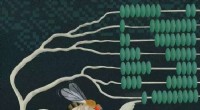
A new theory proposes that all animals share a common set of equations that govern their development and behavior. This theory, called the "biological code," is based on the idea that all animals are composed of the same basic building blocks, and that these building blocks interact with each other in predictable ways.
The biological code is made up of a set of mathematical equations that describe how the different components of an animal's body interact with each other. These equations can be used to predict how an animal will develop and behave under different conditions.
The biological code is still in its early stages of development, but it has the potential to revolutionize our understanding of animal life. By understanding the basic principles that govern animal development and behavior, we can better understand how animals evolve and adapt to their environment. We can also use this knowledge to develop new treatments for diseases and injuries that affect animals.
The Building Blocks of Life
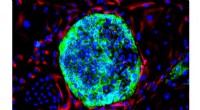
All animals are composed of cells. Cells are the basic unit of life, and they come in a variety of shapes and sizes. Some cells are specialized for specific tasks, such as muscle cells, which are responsible for movement, or nerve cells, which are responsible for communication.
Cells are made up of even smaller units called molecules. Molecules are the building blocks of matter, and they come in a variety of forms. Some molecules are simple, such as water, while others are complex, such as proteins.
The interactions between molecules within cells are what give rise to the properties of life. For example, the interactions between water molecules create the surface tension that allows animals to move through water. The interactions between proteins create the structures that give animals their shape and support.
The Biological Code
The biological code is a set of mathematical equations that describe how the different molecules within cells interact with each other. These equations can be used to predict how an animal will develop and behave under different conditions.
The biological code is not yet complete, but it is already providing valuable insights into the nature of animal life. For example, the biological code has been used to explain how animals develop their body plans, how they learn and remember, and how they respond to their environment.
The biological code has the potential to revolutionize our understanding of animal life. By understanding the basic principles that govern animal development and behavior, we can better understand how animals evolve and adapt to their environment. We can also use this knowledge to develop new treatments for diseases and injuries that affect animals.
Conclusion
The biological code is a new theory that is still in its early stages of development. However, it has the potential to revolutionize our understanding of animal life. By understanding the basic principles that govern animal development and behavior, we can better understand how animals evolve and adapt to their environment. We can also use this knowledge to develop new treatments for diseases and injuries that affect animals.