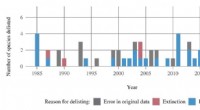
Historically, the ivory-billed woodpecker was considered extinct due to habitat loss, hunting, and other human activities. The last confirmed sighting of an ivory-billed woodpecker occurred in 1944 in Louisiana, and extensive searches conducted in subsequent decades failed to find any evidence of the bird.
In 2005, a video was released that claimed to show an ivory-billed woodpecker in the Cache River National Wildlife Refuge in Arkansas. This video sparked renewed interest in the possibility that the species might still exist. However, the video was subsequently the center of controversy, with some experts questioning its authenticity or suggesting that it could have been a pileated woodpecker (Dryocopus pileatus), which is a similar-looking but distinct species.
Subsequent searches for the ivory-billed woodpecker in the Cache River National Wildlife Refuge and other potential habitats yielded inconclusive results. While some researchers reported hearing or seeing the bird, no definitive evidence emerged to confirm its continued existence.
In 2021, the U.S. Fish and Wildlife Service conducted a comprehensive review of the available scientific evidence and concluded that the ivory-billed woodpecker should be considered "possibly extinct." The Service noted that while the 2005 video and other anecdotal sightings raised some hope for the species' survival, the lack of definitive evidence and the scarcity of recent sightings made it difficult to conclude that the bird still existed.
As a result, the ivory-billed woodpecker remains listed as "possibly extinct" on the U.S. Fish and Wildlife Service's endangered species list. Further research and monitoring efforts may be conducted in the future to determine if the species still persists. However, based on the current information, the ivory-billed woodpecker is widely regarded as critically endangered and likely extinct.