1. Transmembrane Protein Insertion:
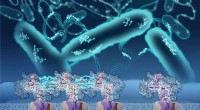
Transmembrane proteins are those that span the entire cell membrane, creating a channel or pathway for molecules to pass through. These proteins are typically inserted into the membrane during their synthesis on the ribosome, in a process called co-translational insertion. Here's how it happens:
- Signal Peptide Recognition: The ribosome translating the mRNA for the protein recognizes a specific signal peptide (usually hydrophobic) near the N-terminus of the protein sequence.
- Interaction with Signal Recognition Particle (SRP): The SRP binds to the signal peptide, halting translation and targeting the ribosome-mRNA complex to the endoplasmic reticulum (ER) membrane.
- ER Membrane Integration: The SRP delivers the ribosome-mRNA complex to a translocon, a protein complex in the ER membrane that facilitates protein insertion.
- Translocation: The ribosome resumes translation, and as the nascent polypeptide chain emerges, it is simultaneously inserted into the ER membrane through the translocon.
- Signal Peptide Cleavage: Once the entire protein, including its transmembrane domains, is inserted into the membrane, the signal peptide is cleaved off by a signal peptidase.
- Membrane Folding and Targeting: The protein may undergo further folding and modifications in the ER before it is transported to its final destination (e.g., plasma membrane, mitochondria).
2. Post-Translational Membrane Insertion:
Some proteins that are not initially synthesized with a transmembrane domain can become embedded in the membrane post-translationally. This process can involve specific membrane-targeting sequences or modifications that induce membrane association. Here are some examples:
- Myristoylation: Myristoylation is the covalent attachment of myristic acid, a 14-carbon saturated fatty acid, to specific glycine residues near the N-terminus of some proteins. This hydrophobic modification can help anchor the protein to the membrane.
- Prenylation: Prenylation involves the attachment of isoprenoid lipids (e.g., farnesyl or geranylgeranyl groups) to cysteine residues near the C-terminus of proteins. Prenylation also promotes membrane association and targeting.
- Palmitoylation: Similar to myristoylation, palmitoylation involves the attachment of palmitic acid, another saturated fatty acid, to cysteine residues. It can modulate protein localization and stability in the membrane.
These are just a few of the mechanisms by which proteins can become embedded in a cell membrane. The specific mechanisms vary depending on the protein's structure, function, and cellular location.