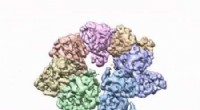
Seeking answers to this enigma, researchers have delved into the molecular intricacies of protein synthesis, unraveling the secrets behind its efficiency. Their findings reveal a delicate interplay of factors that orchestrate this vital cellular process.
The Molecular Players: Ribosomes and Elongation Factors
Imagine a factory assembly line, where ribosomes serve as the central hubs for protein synthesis. These ribosomes, large and complex molecular structures composed of RNA and protein components, are responsible for decoding the genetic information encoded within mRNA molecules. They act as the platform where amino acids are sequentially added to the growing polypeptide chain, giving rise to the diverse array of proteins that drive cellular functions.
However, ribosomes alone cannot accomplish this task flawlessly. They require the assistance of elongation factors, a group of proteins that act as molecular shepherds, guiding the aminoacyl-transfer RNA (tRNA) molecules, each carrying its specific amino acid cargo, to their designated positions on the ribosome. This intricate choreography ensures the precise incorporation of each amino acid, as dictated by the genetic code.
The Fine Balance: Initiation, Elongation, and Termination
Protein synthesis unfolds in three distinct stages: initiation, elongation, and termination. Each of these stages requires a precise interplay of various molecular factors to ensure the swift and accurate assembly of the polypeptide chain.
Initiation marks the beginning of protein synthesis, where the ribosome assembles at the start codon on the mRNA molecule. This process requires a specialized set of factors, including initiation factors, that bind to the ribosome and recruit the appropriate tRNA molecule, carrying the initial methionine amino acid, to the ribosome's start site.
Elongation, the stage of continuous chain growth, involves the repetitive cycle of codon recognition, tRNA binding, peptide bond formation, and tRNA release. Elongation factors play a pivotal role in this process, facilitating the accurate decoding of mRNA codons and ensuring the correct addition of amino acids.
Finally, termination signals the end of protein synthesis. When a stop codon is encountered on the mRNA, release factors recognize and bind to the ribosome, triggering the release of the newly synthesized polypeptide chain and disassembling the ribosome complex.
Regulation and Quality Control: Ensuring Efficiency and Accuracy
Protein synthesis is a highly regulated process, subject to various control mechanisms that fine-tune its efficiency and accuracy. A multitude of cellular signals, including nutrient availability, growth factors, and stress conditions, can influence the rate of protein synthesis.
Additionally, quality control mechanisms safeguard the fidelity of protein synthesis. These mechanisms inspect the newly synthesized proteins, ensuring that they adopt their correct three-dimensional structures and possess the appropriate functional properties. Proteins that fail to meet these quality standards are targeted for degradation, preventing the accumulation of defective molecules.
The Symphony of Protein Synthesis: A Marvel of Molecular Precision
In essence, protein synthesis stands as a testament to the remarkable precision and efficiency of cellular processes. This intricate molecular dance, involving the interplay of ribosomes, elongation factors, and various regulatory mechanisms, ensures the accurate and rapid production of proteins, the workhorses that power the biological machinery of life. Understanding the intricacies of this process not only provides fundamental insights into cellular biology but also holds potential for the development of therapeutic interventions targeting protein synthesis-related diseases and disorders.