1. Detection of foreign DNA:
- Bacteria constantly monitor their intracellular environment for the presence of foreign genetic material, such as viral DNA or RNA.
2. CRISPR RNA (crRNA) production:
- When a viral invasion is detected, specific segments of the foreign DNA are copied and integrated into the bacterium's own DNA as CRISPR spacers.
- These CRISPR spacers are then transcribed into small CRISPR RNAs (crRNAs), each containing a short sequence complementary to a region within the foreign DNA.
3. Cascade complex assembly:
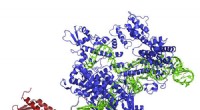
- The crRNAs form complexes with Cas proteins, a group of proteins essential for CRISPR-Cas immunity.
- These complexes are known as Cascade (CRISPR-associated complex for antiviral defense) or CRISPR-Cas effector complexes.
4. Target recognition and binding:
- The Cascade complex scans the intracellular environment for the presence of viral nucleic acids.
- When a crRNA sequence matches a complementary sequence within the viral DNA or RNA, the complex binds to the target.
5. Nuclease activity:
- Once bound to the target, the Cascade complex triggers nuclease activity, typically mediated by Cas nucleases such as Cas9 or Cas12.
- These nucleases generate double-stranded DNA breaks (DSBs) or single-stranded DNA nicks at the target site, effectively cleaving the viral nucleic acids.
6. Interference and degradation:
- The cleavage of viral DNA or RNA disrupts viral replication and transcription, interfering with the ability of the virus to multiply within the bacterial cell.
- The fragmented viral nucleic acids are further degraded by cellular exonucleases and nucleases, leading to the degradation and clearance of the invading virus.
By employing CRISPR-Cas systems, bacteria can recognize and target specific viral sequences, inducing targeted DNA cleavage and ultimately eliminating the viral infection. These immune defense mechanisms play a crucial role in protecting bacteria against various viral threats and contribute to the overall survival and adaptation of bacterial populations.