There is no single answer to this question, as the evolution of homosexual behavior is likely to have been a complex process influenced by a variety of factors. Some of the most commonly cited theories include:
* Natural selection: Homosexual behavior may have evolved as a way to reduce competition for mates. In some species, males who engage in homosexual behavior may be less likely to compete with other males for females, which can give them an advantage in terms of survival and reproduction.
* Kin selection: Homosexual behavior may also have evolved as a way to promote cooperation between relatives. In some species, individuals who engage in homosexual behavior may be more likely to help their relatives raise offspring, which can increase the overall fitness of the group.
* Sexual fluidity: Homosexual behavior may also be simply a manifestation of sexual fluidity, which is the idea that sexual orientation is not fixed but rather can change over time. This theory suggests that homosexual behavior is simply one of many possible sexual orientations that can exist in a population.
Why did homosexual behavior evolve in humans and other animals?
There are also a number of possible reasons why homosexual behavior may have evolved in humans and other animals. Some of the most commonly cited reasons include:
* Mating strategies: Homosexual behavior may provide a way for individuals to explore different mating strategies and learn about sex. This can be especially important for young animals who are still developing their sexual identities.
* Social bonding: Homosexual behavior may also help to create social bonds between individuals. In some species, homosexual pairs may form long-term relationships that provide mutual support and protection.
* Reproduction: In some cases, homosexual behavior may even lead to reproduction. This can occur when a female animal is inseminated by a male animal who is unable to reproduce or when a male animal uses a surrogate mother to carry his offspring.
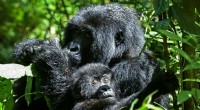
It is important to note that homosexual behavior is not unique to humans. It has been observed in a wide variety of animal species, including mammals, birds, reptiles, and fish. This suggests that homosexual behavior is a natural phenomenon that has evolved independently in a number of different lineages.