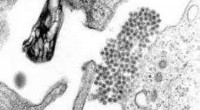
1. Direct contact: Direct contact with rodents or their secretions, such as urine, feces, or saliva, can transmit certain diseases. For example, the bacteria that cause hantavirus pulmonary syndrome (HPS) and leptospirosis can be transmitted through contact with infected rodent urine or feces.
2. Indirect contact: Indirect contact with rodents, such as through contaminated objects or surfaces, can also lead to infection. For example, the hantavirus can be transmitted by inhaling dust or particles that contain dried rodent urine or feces. Similarly, rat-bite fever can be transmitted through contact with objects contaminated with rat saliva.
3. Bites and scratches: Bites and scratches from rodents can directly introduce infectious agents into the human body. For example, the bacteria that cause rat-bite fever and tularemia can be transmitted through bites or scratches from infected rodents.
4. Ingestion of contaminated food or water: Consuming food or water contaminated with rodent urine, feces, or saliva can lead to infection. For example, the bacteria that cause salmonellosis and E. coli can be transmitted through contaminated food or water sources that have been in contact with rodents.
5. Contact with fleas, ticks, or mites: Some rodent-borne diseases are transmitted by fleas, ticks, or mites that live on rodents or in their nests. For example, fleas can transmit the bacteria that cause plague, typhus, and tularemia, while ticks can transmit the bacteria that cause Lyme disease, tularemia, and Colorado tick fever.
6. Airborne transmission: In certain cases, some rodent-borne diseases can be transmitted through the air. For example, the hantavirus can be transmitted by inhaling aerosolized particles of infected rodent urine or feces.
It's important to take precautions to minimize the risk of exposure to rodents and rodent-borne diseases, such as practicing good hygiene, rodent-proofing homes and businesses, and avoiding contact with rodents and their habitats.