The process of chemotaxis in bacteria involves several key components and mechanisms:
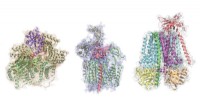
1. Chemoreceptors: Bacteria possess specialized chemoreceptors, which are proteins that can detect specific chemical signals in the environment. These chemoreceptors are located on the cell membrane or in the periplasm of the bacterium.
2. Signal transduction: When a chemoreceptor binds to a specific chemical attractant or repellent, it triggers a signal transduction cascade. This cascade involves a series of protein interactions and modifications that transmit the signal from the chemoreceptors to the flagellar motors responsible for bacterial movement.
3. Flagellar Motors: Bacteria typically have one or more flagella, which are long, whip-like structures that enable them to move. The rotation of these flagella is controlled by the flagellar motors located at their base.
4. Run-and-Tumble Mechanism: Bacterial chemotaxis is characterized by the run-and-tumble mechanism. When the bacteria encounter a uniform environment without significant chemical gradients, they move in a straight line (run). However, when they detect a chemical gradient, the flagellar motors switch the direction of rotation, causing the bacteria to tumble and change their direction of movement.
5. Adaptation: Bacteria have the ability to adapt to changes in the chemical environment. Over time, they can adjust their chemoreceptor sensitivity to maintain a balance between responding to gradients and avoiding excessive tumbling.
As bacteria move, they continuously sample their surroundings and adjust their movement based on the chemical signals they detect. This allows them to efficiently navigate towards favorable conditions and optimize their chances of survival. Bacterial chemotaxis is a fundamental mechanism that contributes to their ecological success in diverse environments, including soil, water, and the human body.
Understanding the intricacies of bacterial chemotaxis has significant implications in various fields, including microbiology, biotechnology, and medicine. By harnessing and manipulating bacterial chemotaxis, scientists can develop innovative strategies to control bacterial behavior for applications such as bioremediation, drug delivery, and the development of antimicrobial agents.