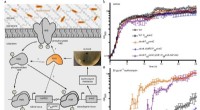
The study, published in the journal Nature Microbiology, was conducted by researchers at the University of California, Santa Barbara (UCSB). The team analyzed the genomes of hundreds of marine bacteria and identified genes that encode molecules that target algae. They then tested the activity of these molecules against a variety of harmful algae species.
The researchers found that the bacterial molecules were effective at inhibiting the growth of all of the algae species tested. In some cases, the molecules completely stopped the growth of the algae. The molecules also caused the algae to produce less toxins.
The researchers believe that the bacterial molecules could be used to develop new ways to control harmful algal blooms. One possibility is to use the molecules as biocides to directly kill the algae. Another possibility is to use the molecules to stimulate the growth of beneficial algae that compete with harmful algae for resources.
The study provides new insights into the complex interactions between marine bacteria and algae. It also suggests that marine bacteria could play an important role in controlling harmful algal blooms.
"This study shows that marine bacteria produce a diverse array of molecules that target algae," said lead author Dr. Christopher Gobler, a professor of marine ecology at UCSB. "These molecules could be used to develop new ways to control harmful algal blooms, which are a major environmental and economic problem."
Harmful algal blooms are a global problem that is getting worse due to climate change. The blooms can cause fish kills, shellfish poisoning, and other environmental and economic problems. In 2018, for example, a harmful algal bloom in the Gulf of Mexico caused an estimated $22 million in losses to the fishing industry.
The study was funded by the National Science Foundation and the National Oceanic and Atmospheric Administration.