Immunoglobulin heavy chain class switching is a process that allows B cells to change the class of antibody they produce. This process is essential for the generation of a diverse antibody repertoire, which is necessary for the body to respond to a wide range of pathogens.
Class switching is regulated by a number of factors, including the cytokine environment and the presence of specific DNA sequences called switch regions. Switch regions are located upstream of each heavy chain constant region gene, and they contain sequences that are recognized by the enzyme activation-induced cytidine deaminase (AID).
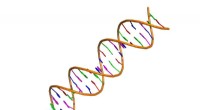
AID is a member of the APOBEC family of DNA editing enzymes. AID deaminates cytidine residues in DNA, which can lead to the conversion of a cytosine to a uracil. This change in the DNA sequence can then be repaired by the cell's DNA repair machinery, resulting in the deletion of the switch region and the joining of the heavy chain variable region gene to a different constant region gene.
The deletion of the switch region also results in the loss of the stop codon that is located at the end of the variable region gene. This allows the heavy chain transcript to be read through into the constant region gene, resulting in the production of a full-length antibody protein.
The class of antibody that is produced by a B cell is determined by the cytokine environment. For example, the cytokine interleukin-4 (IL-4) promotes the switching of B cells to the IgG1 class, while the cytokine interferon-gamma (IFN-γ) promotes the switching of B cells to the IgG2a class.
Class switching is an essential process for the generation of a diverse antibody repertoire. By allowing B cells to change the class of antibody they produce, the body is able to mount an effective immune response against a wide range of pathogens.
How new loops in DNA packaging help us make diverse antibodies
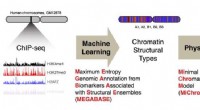
The recent discovery of new loops in DNA packaging has helped us to understand how B cells are able to generate such a diverse repertoire of antibodies. These loops, which are called "switch recombination loops," form when the DNA in the switch region of the heavy chain locus is brought into close proximity. This allows AID to access the DNA and deaminate the cytidine residues, which leads to the deletion of the switch region and the joining of the variable region gene to a different constant region gene.
The formation of switch recombination loops is regulated by a number of factors, including the transcription factor PU.1. PU.1 is expressed in B cells, and it binds to specific DNA sequences in the switch region. This binding helps to bring the DNA into close proximity, which promotes the formation of switch recombination loops.
The discovery of switch recombination loops has helped us to understand how B cells are able to generate a diverse repertoire of antibodies. This knowledge has important implications for the development of new vaccines and treatments for autoimmune diseases.