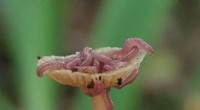
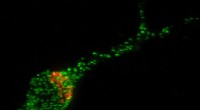
The researchers found that a type of parasitic fungus, called Ophiocordyceps unilateralis, infects the brains of the crustaceans, called water fleas, and then takes control of their behavior. The infected water fleas become highly active and start to glow in the dark, making them easy prey for birds and other predators.
"This is a really fascinating example of how a parasite can completely change the behavior of its host," said study lead author Dr. James Kinsella, a professor of integrative biology at UC Berkeley. "The fungus essentially turns the water fleas into zombies."
The researchers believe that the fungus may use the water fleas as a way to spread its spores. When the infected water fleas are eaten by birds, the spores are passed through the birds' digestive system and can then infect new water fleas.
The research team hopes that their findings can help us better understand how parasites manipulate the behavior of their hosts. This could have implications for understanding and treating human diseases that are caused by parasites, such as malaria and schistosomiasis.
The study was published in the journal Current Biology.