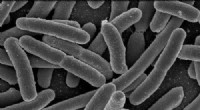
Here's how the cholera bacterium Vibrio cholerae has evolved strategies to survive and defend against water predators:
1. Biofilm Formation: V. cholerae has the ability to form biofilms, which are complex communities of microbial cells that adhere to surfaces and are enclosed in a protective matrix. Biofilm formation allows V. cholerae to attach to various surfaces in aquatic environments, including plankton and organic particles. By forming biofilms, the bacteria become less accessible to predators and can better withstand the effects of environmental stressors, enhancing their overall survival.
2. Quorum Sensing: V. cholerae uses quorum sensing, a cell-to-cell communication mechanism, to coordinate bacterial behavior and gene expression in response to population density. When V. cholerae reach a certain population threshold, they produce and release signal molecules called autoinducers, which trigger the expression of specific genes. Some of these genes encode factors involved in defense mechanisms against predators, including the production of toxins and proteases that can inhibit or kill protozoan predators.
3. Motility: V. cholerae possesses flagella, which are whip-like structures, providing the bacteria with the ability to move and navigate through aquatic environments. Motility allows V. cholerae to escape from harmful conditions, such as predator encounters or adverse environmental factors. By moving away from predators or toward more favorable conditions, the bacteria can increase their chances of survival.
4. Toxin Production: V. cholerae produces a variety of toxins, including cholera toxin (CT) and cytotoxin (CTX). CT is responsible for the severe diarrheal symptoms associated with cholera. In addition to its role in causing disease in humans, CT can also affect aquatic organisms. The toxin can damage the cells and tissues of predators, making them less efficient at capturing and consuming V. cholerae.
5. Resistance Mechanisms: V. cholerae has developed various resistance mechanisms to protect against predators. The bacteria can produce extracellular enzymes that degrade the cell wall structures of protozoa and other predators, making it difficult for them to ingest and digest V. cholerae. Additionally, V. cholerae can produce antimicrobial substances that directly inhibit or kill predators.
It's important to note that these survival strategies are not unique to V. cholerae and can be found in other bacterial species that inhabit aquatic environments. The ability of V. cholerae to evade water predators contributes to its persistence in aquatic reservoirs and helps explain its successful transmission and spread in regions where access to clean water and proper sanitation are limited.