The phycologists, led by Dr. Silvia Vignoni from the Stazione Zoologica Anton Dohrn research center in Naples, Italy, studied two species of brown algae, Fucus vesiculosus and Ascophyllum nodosum. They found that F. vesiculosus has a layer of nanoscale bumps on its surface that scatter light and produce the shimmering effect, while A. nodosum does not have these bumps and appears dull.
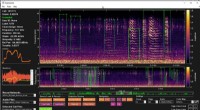
The team used a variety of techniques, including electron microscopy and spectroscopic imaging, to characterize the structural and optical properties of the two algae species. They found that the bumps on F. vesiculosus are made of a protein called laminarin, which is responsible for creating the shimmering effect.
Laminarin is a water-soluble polysaccharide that is found in the cell walls of brown algae. It is composed of several glucose molecules linked together in a chain. The length and branching of the laminarin chains can vary, depending on the species of algae.
In the case of F. vesiculosus, the laminarin chains are long and branched, which creates a 3D structure that scatters light and produces the shimmering effect. In A. nodosum, the laminarin chains are shorter and less branched, so they do not scatter light as effectively.
The team also found that the shimmering effect is wavelength-dependent. Shorter wavelengths of light, such as blue light, are scattered more effectively than longer wavelengths, such as red light. This is why F. vesiculosus appears to shimmer blue-green in sunlight.
The researchers believe that the shimmering effect of F. vesiculosus could be an adaptation that helps the algae to avoid being eaten by predators. The shimmering effect may make the algae appear less palatable to predators, or it may deter predators by making it more difficult to see the algae.
The team is now investigating whether the shimmering effect of brown algae could be used for other applications, such as developing new optical technologies and materials. They are also interested in understanding how other marine organisms adapt to their environment using structural and optical features.