A team of researchers at the University of California, Berkeley, has used advanced imaging techniques to reveal how a parasitic kiss alters cell metabolism. The findings, published in the journal Nature, could lead to new treatments for diseases caused by parasites.
The parasite in question is called Trypanosoma brucei, and it causes African sleeping sickness. African sleeping sickness is a fatal disease that affects millions of people in sub-Saharan Africa. The parasite is transmitted by tsetse flies, which inject the parasite into humans when they bite.
Once inside the human body, the parasite travels to the bloodstream, where it multiplies and invades red blood cells. The parasite then alters the metabolism of the red blood cells, causing them to produce more energy than they need. This excess energy is used by the parasite to grow and reproduce.
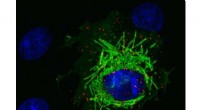
The researchers used a technique called super-resolution microscopy to image the parasite and the red blood cells. This technique allowed them to see the parasite in unprecedented detail, and they were able to observe how the parasite alters the structure of the red blood cells.
The researchers found that the parasite causes the red blood cells to become more permeable to glucose, a type of sugar. This allows the parasite to take up more glucose from the bloodstream and use it to produce energy.
The researchers also found that the parasite alters the expression of genes in the red blood cells. This changes the way that the red blood cells function, and it contributes to the development of African sleeping sickness.
The findings of this study could lead to new treatments for African sleeping sickness. By targeting the metabolic changes caused by the parasite, researchers may be able to develop drugs that kill the parasite or prevent it from multiplying.