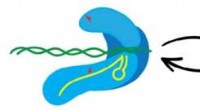
The research team led by Dr. Matthias Seedorf and Dr. Frank Buchholz has now discovered that the protein Urm1 plays a key role in the production of heat shock proteins. Urm1 is a chaperone, which means that it helps other proteins to fold into their correct shape. The researchers found that Urm1 binds to the messenger RNA (mRNA) of heat shock proteins and helps to recruit ribosomes to the mRNA, which is necessary for the production of proteins.
In the absence of Urm1, the production of heat shock proteins is impaired and cells are more sensitive to stress. The researchers also found that Urm1 is essential for the survival of cells under extreme stress conditions.
These findings provide new insights into the mechanisms that cells use to protect themselves from stress. The discovery that Urm1 plays a key role in heat shock protein synthesis opens up new possibilities for the development of therapies for stress-related diseases.