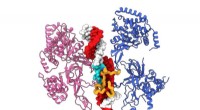
At the heart of this phenomenon is a protein called actin. Actin is a cytoskeletal protein that is found in all eukaryotic cells, including those of butterflies and other insects. In the wing cells of these insects, actin filaments form a network of repeating, parallel arrays that act as a diffraction grating.
When light strikes the wing surface, it encounters these actin-based diffraction gratings. The light waves are diffracted, or scattered, by the regular spacing of the actin filaments. Depending on the spacing between the filaments, different wavelengths of light are selectively reinforced or canceled out. This process results in the vibrant colors that we perceive on butterfly wings.
The precise arrangement of actin filaments in the diffraction grating determines the specific colors that are reflected or transmitted by the wings. Variations in the spacing and orientation of the filaments give rise to the diverse array of colors seen in different butterfly species.
Actin's role in wing coloration is not limited to butterflies alone. Other insects, such as moths, beetles, and dragonflies, also utilize actin-based diffraction gratings to generate their impressive color displays. This natural phenomenon highlights the remarkable complexity and diversity of biological systems and the intricate interplay between proteins, light, and structural arrangements in producing visual splendor in the animal kingdom.