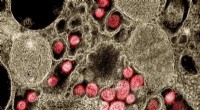
In a new study published in the journal "Nature Cell Biology," researchers from the Max Planck Institute for Biology of Ageing and the University of Cologne provide significant insight into this fundamental cellular process. Using state-of-the-art microscopy and biochemical techniques, the team uncovered a key molecular mechanism that governs the directed growth of microtubules, one of the main cytoskeletal filaments.
The researchers focused on a protein complex known as the γ-tubulin ring complex (γ-TuRC), which plays a crucial role in microtubule nucleation and growth. By precisely manipulating the components of the γ-TuRC and observing the resulting effects in living cells, they revealed how this molecular machinery is organized and regulated.
Their findings demonstrated that the γ-TuRC complex is organized in a highly structured manner, with specific subunits positioned to precisely direct the growth of microtubules. Moreover, they identified a previously unrecognized regulatory mechanism involving the post-translational modification of γ-tubulin, which controls microtubule nucleation and growth dynamics.
"This study provides a fundamentally new understanding of how cells control the growth of their microtubules," says Dr. Jan Brugués, group leader at the Max Planck Institute for Biology of Ageing and the University of Cologne. "Our findings not only shed light on the intricate mechanisms governing cytoskeletal dynamics but also have implications for understanding cellular processes and diseases where microtubules play a crucial role."
Microtubules are involved in various cellular functions beyond structural support, including cell division, organelle transport, and cell migration. Dysregulation of microtubule dynamics is associated with several diseases, such as cancer, neurodegenerative disorders, and ciliopathies. Therefore, the insights gained from this study may have potential implications for the development of novel therapeutic strategies.
"We hope our work will inspire future research to further elucidate the molecular mechanisms that govern cytoskeletal dynamics and their significance in health and disease," adds Brugués.