New research conducted at the University of Dundee’s School of Life Sciences has revealed the unexpected but vital role ribosomes play in signalling new blood vessel formation – a process known as angiogenesis that is essential for the growth of new tissues.
The findings of the study, published in Nature Communications, could help pave the way for new drugs to stop the formation of new blood vessels in tumours to halt their growth, or create new vessels in conditions where blood supply is restricted.
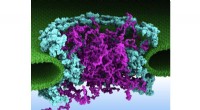
Ribosomes are complex nanomachines responsible for protein synthesis in all living cells. Although central to cell function, to date ribosomes have not been known to play a regulatory role in the vascular system.
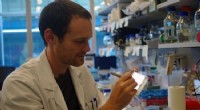
Dr John Silke and PhD student Sarah Grant in the School of Life Sciences screened a library of thousands of human proteins to identify novel regulators of new blood vessel formation. Against expectations, they identified four proteins that make up part of the structure of the ribosome.
To probe their function they focused on the ribosomal protein RPL3, and showed it to play a key role in endothelial cells, the cell type that lines the blood vessels, to control their ability to migrate, form sprouts, and tube structures – all key processes in blood vessel formation.
Crucially, the researchers showed that blood vessels could not form in the absence of RPL3, supporting its essential role in this process.
The research was funded by the Medical Research Council and the Wellcome Trust.
Dr John Silke said, “This is a fantastic example of how basic research into the inner-workings of cells can unexpectedly uncover new and exciting areas for therapeutic research.”
Sarah Grant said, “Who would have thought that the humble ribosomes that we learnt about in high school textbooks would be so pivotal for life-giving blood vessel formation?”
Professor Dario Alessi, Director of the School of Life Sciences, said, “This is an exciting and paradigm shifting discovery with profound implications for the development of novel therapies for a wide range of pathologies. We are particularly proud of Sarah’s achievement and of the highly collaborative and synergistic research environment that has enabled such innovations to take place.”