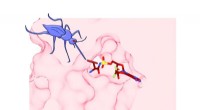
The study, which was published in the journal Nature, found that strigolactone is produced in the roots of plants and then travels up the stem to the shoot apical meristem (SAM), where new branches are formed. The SAM is a small group of cells at the tip of the stem that is responsible for producing new growth.
When strigolactone levels are high, it inhibits the growth of new branches. This is because strigolactone causes the SAM to produce a protein called DWARF14, which blocks the expression of genes that are necessary for branch formation. However, when strigolactone levels are low, the production of DWARF14 is inhibited and the expression of branch-promoting genes is increased, leading to the formation of new branches.
The findings of this study have important implications for plant breeding and agriculture. By manipulating the levels of strigolactone in plants, it is possible to control their branching pattern and overall growth habit. This could be used to create plants that are more compact or bushier, which would be ideal for growing in small spaces or for use as ornamental plants. It could also be used to create plants that are more resistant to lodging, which is a problem that can occur when plants become too tall and top-heavy.
The study also provides new insights into the role of strigolactone in plant development. It is now known that strigolactone is not only involved in controlling branching, but also in other processes such as root growth, leaf senescence, and seed germination. This suggests that strigolactone is a key hormone that plays a vital role in the overall development and growth of plants.