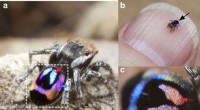
*Sylvicola* *lestes*, commonly known as the lungless frog, has intrigued scientists ever since its discovery in the Amazon rainforest. As its name suggests, this tiny frog was believed to lack lungs, relying solely on its skin for gas exchange. However, recent research conducted by a team led by Dr. Mariana Moravec, a biologist at the University of Sao Paulo, has revealed a different story.
Using advanced imaging techniques, including micro-computed tomography (micro-CT) and histological analysis, the researchers examined several specimens of *Sylvicola* *lestes* and found that they did, in fact, possess rudimentary lungs. These lungs, although significantly reduced in size compared to those of other frogs, were found to contain delicate air sacs and blood vessels, indicating their functionality in gas exchange.
"We were astonished by our findings," said Dr. Moravec. "The presence of lungs in *Sylvicola* *lestes* completely changes our understanding of this species and challenges the existing paradigm of lunglessness in frogs. It highlights the remarkable diversity and adaptability within the amphibian world."
Further investigation revealed that the lung structure of *Sylvicola* *lestes* is unique among amphibians. The lungs are highly vascularized, with a dense network of blood vessels, suggesting a high efficiency in oxygen uptake. The researchers believe that this adaptation allows the frog to survive in its humid, oxygen-rich rainforest environment, where cutaneous respiration alone may not be sufficient.
The discovery of lungs in *Sylvicola* *lestes* raises several questions about the evolution and adaptation of frogs and challenges traditional classifications based solely on lung presence or absence. It also opens up new avenues for studying the respiratory physiology of amphibians and understanding the diverse strategies they have evolved to thrive in various ecological niches.
This groundbreaking research underscores the importance of rigorous scientific investigation and highlights the value of revisiting long-held assumptions to gain a deeper understanding of the natural world's complexity and fascinating diversity.