- Neurons are specialized cells that receive, process, and transmit signals. They communicate with each other through synapses.
- Circuits are groups of interconnected neurons that perform specific tasks.
Synapses and Neurotransmitters:
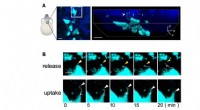
- Synapses are the junctions where neurons communicate with each other.
- Neurotransmitters are chemical messengers released by neurons to transmit signals across synapses.
Brain Regions and Functions:
- Cerebral Cortex: Responsible for higher-order functions like consciousness, language, and thought.
- Limbic System: Involved in emotions, memory, and motivation.
- Brain Stem: Controls basic functions like breathing, heart rate, and sleep-wake cycles.
- Cerebellum: Coordinates muscle movements and balance.
Neural Plasticity and Learning:
- Neural Plasticity: The brain's ability to change and adapt over time.
- Learning involves strengthening connections between neurons that are repeatedly activated together (known as Long-Term Potentiation) and weakening those that are rarely used (Long-Term Depression).
Sensation and Perception:
- Sensation is the process of receiving sensory information through our senses.
- Perception is the brain's interpretation of sensory information and giving it meaning.
Memory and Consolidation:
- Memory is the process of encoding, storing, and retrieving information.
- Consolidation is the process by which memories are stabilized over time.
Emotions:
- Emotions are complex psychological states involving bodily responses, cognitive appraisal, and subjective feelings.
- Brain regions like the amygdala and prefrontal cortex play important roles in processing and regulating emotions.
Decision Making:
- Decision making involves weighing options and choosing the best course of action.
- Brain regions like the prefrontal cortex, amygdala, and basal ganglia are involved in this process.
Attention:
- Attention is the ability to focus on specific information and ignore distractions.
- Brain networks involving the prefrontal cortex, basal ganglia, and thalamus regulate attention.
Language:
- Language involves understanding and producing spoken or written words.
- Brain regions like Broca's area and Wernicke's area are critical for language processing.
Remember, the brain is incredibly complex, and this simplified explanation touches on general aspects of its functioning. Neuroscientists are continuously learning more about how the brain operates and interacts with the rest of our bodies and the environment.