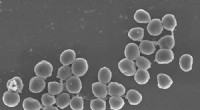
Influenza viruses are constantly evolving, and scientists have long puzzled over how they manage to replicate their RNA genomes so accurately in the presence of so many mutations.
Reporting in the journal Nature Structural & Molecular Biology, UW researchers show how the virus's RNA polymerase--an enzyme that builds new RNA molecules--is able to "proofread" its work as it goes, correcting ошибок. Until now, scientists did not know how the polymerase could carry out this quality-control function, which is crucial to the virus's ability to make accurate copies of its genome.
"We've uncovered the mechanism behind how the polymerase can monitor its own activity," said corresponding author Michael G. Rossmann, a UW professor of biological structure. "This finding represents a leap forward in our understanding of how influenza viruses replicate, and it opens up new avenues to explore influenza drug design."
The research team used a technique called X-ray crystallography to determine the structure of the influenza virus RNA polymerase. This technique allows scientists to visualize the arrangement of atoms within a molecule.
The researchers found that the polymerase has a unique "flap" domain that acts as a quality-control mechanism. When the polymerase incorporates an incorrect nucleotide into the RNA molecule it is building, the flap domain changes shape, halting the replication process and allowing the polymerase to remove the incorrect nucleotide.
"The flap domain is like a quality-control inspector that checks each nucleotide as it is added to the RNA molecule," said Rossmann. "If it detects an error, it hits the brakes and removes the incorrect nucleotide."
The researchers say that the flap domain could be a potential target for new influenza drugs. By designing drugs that interfere with the flap domain's function, scientists could potentially inhibit the virus's ability to replicate and cause disease.
"Our findings provide a new framework for understanding how influenza viruses replicate," said Rossmann. "This knowledge could lead to the development of new antiviral drugs that are more effective and less likely to be resisted by the virus."
In addition to Rossmann, the research team included UW scientists Zhilei Wang, Min Zhu, Ming Luo, Haijie Fan, and Jun-Jie Pei. The research was funded by the National Institutes of Health.