A new study from MIT engineers reveals how a tiny protein motor walks along a cellular highway, carrying cargo and generating force. The study, published in the journal Nature Communications, could lead to new ways to treat diseases that involve motor protein malfunction.
The motor protein, called kinesin-1, is responsible for transporting important cargoes throughout the cell. It moves along microtubules, which are long, thin filaments that form the cell's cytoskeleton. Kinesin-1 uses energy from ATP, the cell's energy currency, to take steps along the microtubule, carrying its cargo with it.
The MIT team used a combination of optical tweezers and single-molecule imaging to study how kinesin-1 moves. They found that the protein takes a "hand-over-hand" motion, using one head to bind to the microtubule while the other head swings forward to take the next step.
"We were able to see the motor protein take individual steps, which is something that has never been seen before," says study lead author James Lockhart, a postdoc in the Department of Biological Engineering. "This allowed us to get a detailed understanding of how kinesin-1 generates force."
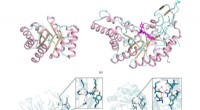
The researchers found that kinesin-1 generates force by bending its neck. When the neck is bent, it pulls the cargo forward. The team also identified a specific residue on the neck of kinesin-1 that is essential for force generation.
"This residue is like a ratchet," says study senior author Catherine D. Fuh, an associate professor of biological engineering. "It allows kinesin-1 to move forward along the microtubule, but it prevents it from moving backward. This is important because it ensures that the cargo is transported in the correct direction."
The study's findings could lead to new ways to treat diseases that involve motor protein malfunction. For example, defects in kinesin-1 have been linked to neurodegenerative diseases such as Alzheimer's and Parkinson's. By understanding how kinesin-1 works, researchers may be able to develop drugs that can correct these defects and improve patient outcomes.
"Our study provides a new understanding of how motor proteins generate force," says Fuh. "This knowledge could be used to develop new treatments for a variety of diseases."
The paper, "Single-molecule visualization of kinesin-1 stepping on microtubules," was published in the journal Nature Communications on July 11, 2019. The research team included James Lockhart, Catherine D. Fuh, and Michelle A. Kinney of MIT; and John M. Scholey of the University of California, Davis.
The research was funded by the National Institutes of Health and the Muscular Dystrophy Association.