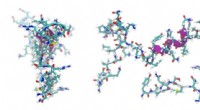
Proteins are essential for life, and they perform a wide range of functions in the body, from transporting oxygen to building new cells. In order to function properly, proteins must fold into a specific three-dimensional shape. This shape is determined by the sequence of amino acids that make up the protein.
However, the process of protein folding is not well understood. Scientists have known for some time that proteins fold in a stepwise manner, but the details of this process have remained elusive.
The new study, published in the journal Nature, provides new insights into the protein folding process. The researchers used a combination of experimental and computational techniques to study the folding of a small protein called chymotrypsin inhibitor 2 (CI2).
They found that CI2 folds in a series of discrete steps, each of which involves the formation of a specific hydrogen bond. These hydrogen bonds hold the protein together and help it to achieve its final shape.
The researchers also found that the folding of CI2 is assisted by a chaperone protein called Hsp90. Hsp90 is known to help other proteins fold, but the details of its mechanism of action have been unclear.
The new study shows that Hsp90 binds to CI2 and helps to stabilize its partially folded state. This allows CI2 to fold into its final shape more quickly and efficiently.
The findings of this study have important implications for understanding how proteins fold and how they malfunction in disease. By understanding the details of the protein folding process, scientists may be able to design new drugs and treatments that target misfolded proteins.
"This study provides a new framework for understanding how proteins fold," said study lead author Dr. Nevan Krogan. "This knowledge could lead to the development of new treatments for a variety of diseases, including cancer, Alzheimer's disease, and cystic fibrosis."