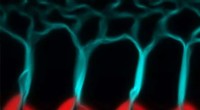
1. Photonic Crystals: The brilliant colors of jewel beetles arise from the presence of photonic crystals within their exoskeletons. These natural photonic crystals are composed of multiple layers of chitin, a strong and flexible material that forms the insect's outer covering.
2. Light Interference: The arrangement of these chitin layers creates tiny periodic structures that act as diffraction gratings. When light strikes the surface of the beetle's exoskeleton, it interacts with these structures, causing specific wavelengths of light to be reinforced while others are canceled out through constructive and destructive interference.
3. Iridescence: Jewel beetles often exhibit iridescence, where colors change depending on the viewing angle. This effect arises because the spacing between the chitin layers varies across the beetle's body. As the angle of incident light changes, different sets of wavelengths are reinforced, resulting in a shift in perceived colors.
4. Multilayer Structures: Some jewel beetles possess multiple layers of photonic crystals stacked upon one another. This multilayer architecture enables them to reflect a broader range of wavelengths, enhancing the intensity and complexity of their coloration.
5. Diversity in Structures: Scientists have identified various types of photonic crystal structures in jewel beetles, including hexagonal, lamellar, and fibrillar arrangements. These variations contribute to the remarkable diversity observed in the colors and patterns displayed by different jewel beetle species.
6. Combination with Pigments: In some cases, jewel beetles combine structural coloration with pigmentary colors. This combination further expands the range of hues and color effects they can achieve.
Studying the structural coloration mechanisms in jewel beetles has not only provided insights into the evolution and adaptation of these beetles but has also inspired innovations in various fields, including optics, photonics, and material science.