Using super-resolution imaging techniques, researchers observed how cells' molecular repair crews -- known as nuclear pore complexes -- quickly reorganize when part of the cell membrane ruptures. Nuclear pore complexes control what enters and exits a cell's nucleus, the control center of the cell.
"Scientists have long known that cells have a way to very quickly repair damage, but no one knew how," said senior author Erin Trantham-Davidson, PhD, assistant professor of molecular biosciences in the Weinberg College of Arts and Sciences. "It turns out cells have a remarkable and unexpected way to very quickly repair and maintain their basic structure."
The study was published in the journal Current Biology.
In experiments using human cells in the lab, researchers made targeted tears in the nuclear membrane and then observed how the cells responded. Normally, the inside of a cell is teeming with molecules floating around, but after a tear is made in the cell's membrane, nuclear pore complexes form a tight seal around the edges of the tear to stop any molecular leakage.
"If this didn't happen quickly, it would be catastrophic for the cell, potentially leading to death," Trantham-Davidson said.
Within 30 seconds of the tear, nuclear pore complexes completely lined the edge of the break. Within two minutes, the pores were organized and able to control what passed in and out of the nucleus, allowing the cell to return to normal function.
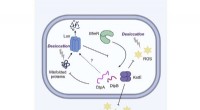
Using live-cell imaging and computer simulations, the researchers also determined the physical mechanism behind the quick repair. They observed that, following membrane damage, the inner and outer nuclear membranes fuse together, creating a scaffold upon which nuclear pore complexes can swiftly assemble. This process involves the remodeling of nuclear pore complexes, in which the complexes disassemble, translocate along the membrane and reassemble at the site of damage. This mechanism offers significant insights into the dynamic behavior and adaptability of nuclear pore complexes.
"Nuclear pore complexes are incredibly large, so scientists traditionally assumed they were slow and immobile," Trantham-Davidson said. "Our study shows that they are remarkably dynamic, and this is likely true for other large biological complexes."
The findings could have implications for cancer treatments. Cancer cells often lose the ability to repair damage to their nuclear membrane, which could make them more sensitive to therapies targeting this repair mechanism.
"By understanding more about how cells repair basic structures when they are damaged, we may be able to design new therapies to help the immune system better recognize and kill cancer cells," Trantham-Davidson said.