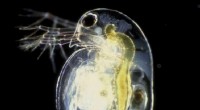
Fruit flies and roundworms are two of the most important model organisms in biology. They are used to study a wide variety of biological processes, from development to aging to disease. One of the key areas of research in these organisms is how gene expression is regulated.
Gene expression is the process by which the information in a gene is used to produce a functional protein. It is a complex process that is controlled by a variety of factors, including transcription factors, silencers, and microRNAs.
In fruit flies and roundworms, gene expression is regulated by a number of different mechanisms. These mechanisms include:
* Transcription factors: Transcription factors are proteins that bind to DNA and promote or repress the transcription of genes. They are essential for controlling the expression of genes during development and in response to environmental cues.
* Silencers: Silencers are proteins that bind to DNA and prevent the transcription of genes. They are often used to silence genes that are no longer needed or that are potentially harmful.
* MicroRNAs: MicroRNAs are small molecules that bind to mRNA and prevent it from being translated into protein. They are involved in a variety of cellular processes, including development, differentiation, and apoptosis.
The study of gene regulation in fruit flies and roundworms has led to a number of important discoveries. These discoveries have provided new insights into how genes are expressed and how they are controlled. This knowledge is essential for understanding how biological processes work and for developing new treatments for diseases.
Specific Examples of Gene Regulation in Fruit Flies and Roundworms
There are many specific examples of gene regulation in fruit flies and roundworms. Here are a few:
* In fruit flies, the gene Ultrabithorax (Ubx**) is responsible for controlling the development of the wings and halteres. Ubx is expressed in the developing wing imaginal discs, and it promotes the growth of the wings and the formation of the wing veins.
* In roundworms, the gene lin-4** is responsible for controlling the timing of larval development. lin-4 is expressed in the hypodermis, and it promotes the molting of the worm.
* In both fruit flies and roundworms, the gene let-7** is involved in regulating the development of the nervous system. let-7 is expressed in the developing nervous system, and it promotes the differentiation of neurons.
These are just a few examples of the many ways in which gene expression is regulated in fruit flies and roundworms. The study of gene regulation in these organisms has led to a number of important discoveries, and it is an area of ongoing research.
Conclusion
Gene expression is a complex process that is essential for controlling the development and function of organisms. In fruit flies and roundworms, gene expression is regulated by a number of different mechanisms, including transcription factors, silencers, and microRNAs. The study of gene regulation in these organisms has led to a number of important discoveries, and it is an area of ongoing research.