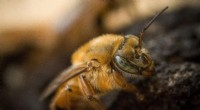
Bees have compound eyes, which means that they are made up of many tiny lenses. This gives them a very wide field of vision, and they can see in almost all directions at once. However, their vision is not as sharp as ours, and they cannot see fine details as well as we can.
Bees are also able to see colors, but not all of the colors that we can. They can see red, green, blue, and ultraviolet light, but they cannot see orange or yellow. This is because the pigments in their eyes are different from the pigments in our eyes.
Bees use their vision to find food, navigate their surroundings, and communicate with each other. They are able to learn and remember the location of flowers, and they can even use their vision to follow landmarks.
How FReD Can Help
FReD (Functional Receptive Field) is a computer model that simulates the visual system of a bee. It can be used to study how bees see the world, and to understand how their vision affects their behavior.
FReD has been used to show how bees are able to see flowers in a field of grass. The model shows that bees are able to use the color and shape of flowers to distinguish them from the grass. They are also able to use the motion of flowers to track them as they move.
FReD has also been used to study how bees navigate their surroundings. The model shows that bees are able to use landmarks to remember the location of their hive and to find food. They are also able to use the sun as a compass to help them navigate.
FReD is a valuable tool for studying the visual system of bees. It can help us to understand how bees see the world, and to understand how their vision affects their behavior.