Published in the journal *Scientific Reports*, the study analyzed blood samples from more than 1,500 frogs.
"Bd infects the skin of amphibians, and it's been hypothesized that the fungus can then invade deep tissues and cause systemic infections. However, there has been limited evidence to support this in wild populations until now," said study co-author Delia Gutiérrez, a postdoctoral research associate in the University of Georgia's Warnell School of Forestry and Natural Resources. "Detecting the pathogen's genetic material in the bloodstream of frogs confirmed for us that *Batrachochytrium dendrobatidis* does move systemically."
Previous evidence supporting systemic infection with Bd was based primarily on examination of deceased amphibians. These observations could be biased by the likelihood that an individual with a systemic infection would be more likely to die or that certain populations would be more heavily sampled due to die-off events.
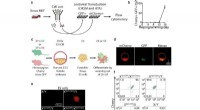
"The main difference between our study and others that have detected *B. dendrobatidis* systemically is that ours is the first to document Bd in the bloodstream in multiple species of frogs from natural populations over time," said lead author Matthew Becker, who worked on the study while completing his Ph.D. at UGA. "We used a field-deployable molecular diagnostic tool that allowed us to rapidly screen blood samples from multiple species at a remote field station."
The researchers sampled 26 frog species from the San Lorenzo Protected Area, a site in Panama that has experienced chytridiomycosis outbreaks. The team sampled frogs across different times of the year to understand how the disease varies seasonally and over time. They detected *B. dendrobatidis* in 4% of the frogs' blood samples, and they found that detection of Bd in the blood was linked to an increase in mortality.
"This tells us that animals that have *B. dendrobatidis* in their bloodstream are more likely to die," Gutiérrez said. "This was something that was suspected, but there wasn't a lot of information available."
The researchers plan to continue studying the epidemiology of chytridiomycosis and developing tools to help combat it.
"Now that we have a new way of looking at the disease, we can start asking questions like 'What are the physiological mechanisms that lead to death from Bd?' and 'How does the immune response play a role?'" Gutiérrez said. "This will help us understand how the pathogen causes disease, which is important for the development of mitigation strategies to help save frogs."