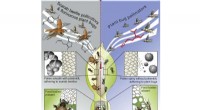
When ribosomes—tiny protein-making machines within cells—encounter mistakes or roadblocks along the RNA path, they typically stall. But a new study from researchers at the University of California, Berkeley, has revealed how ribosomes can override these obstacles with the help of a molecular "traffic controller."
The study, published in the journal Nature Structural & Molecular Biology, identified a protein complex that acts like a traffic controller for ribosomes and allows protein production to continue even when roadblocks are encountered. This discovery could lead to new ways to target the process of protein synthesis, which could potentially have implications for treating diseases caused by protein misfolding or protein synthesis errors.
"Ribosomes are basically the protein makers in cells, but there's a lot that can go wrong during the protein-making process, so the ribosome needs to have strategies in place to fix those mistakes," said study co-lead author Dr. Andrew Lam. "We identified a protein complex that is sort of like a traffic controller for ribosomes, helping to direct traffic and fix any errors that occur."
The research team used a combination of cryo-electron microscopy and biochemical techniques to study how ribosomes interact with the newly identified protein complex, known as the RQC complex. They found that the complex functions as a surveillance mechanism that monitors the ribosome's progress during protein synthesis. When the ribosome encounters a roadblock, such as a mutation or an error in the RNA sequence, the RQC complex intervenes and helps the ribosome to either continue translating the RNA or to restart the process of protein synthesis.
"This discovery is exciting because it gives us new insights into how ribosomes function and how they overcome obstacles during the protein-making process," said Lam. "Understanding how these molecular machines work could potentially lead to new drugs for diseases caused by protein synthesis errors or misfolding, including neurodegenerative disorders and certain cancers."
In the future, the research team plans to further investigate the role of the RQC complex in protein synthesis and to explore potential therapeutic applications for their discovery.