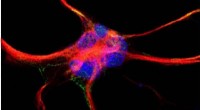
- Cells must produce a small electrical signal (the "needle") in a vast sea of biological molecules (the "haystack") to communicate with other cells.
- The challenge is to find the right partner molecule(s) to detect and respond to the signal amidst all the other molecules.
- This is a particularly challenging task in the crowded and noisy environment of the cell.
- Cells have evolved several ingenious mechanisms to solve this problem.
How Cells Filter Molecular Noise and Respond to Specific Signals
- Protein-protein interactions: Proteins often have specific binding sites that allow them to interact with only a few other proteins. This specificity helps to filter out molecular noise and ensure that signals are only transmitted to the correct target molecules.
- Membrane compartmentalization: Cells are divided into different compartments by membranes. This helps to keep different molecules separated and prevents them from interfering with each other's signals.
- Gene regulation: Cells can control which genes are expressed in response to specific signals. This allows cells to fine-tune their response to different stimuli.
- Signal transduction pathways: Signal transduction pathways are chains of molecular events that transmit signals from the cell surface to the nucleus. Each step in the pathway is tightly regulated, ensuring that signals are only transmitted when all of the necessary conditions are met.
Conclusion
The needle in a haystack problem is a fundamental challenge for living cells. However, cells have evolved a variety of elegant solutions to this problem, allowing them to communicate effectively and efficiently with each other.