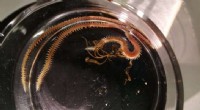
Marine snail larvae play a critical role in the life cycles of many marine species, and their ability to swim and disperse is essential for their survival and reproduction. The study focused on the larvae of the marine snail *Crepidula fornicata* and employed high-speed video imaging to capture the intricate details of their swimming behavior.
The researchers revealed that *C. fornicata* larvae use two distinct modes of swimming: crawling and swimming. During crawling, the larvae move along surfaces using cilia, tiny hair-like structures covering their bodies. For swimming, they combine body undulations with ciliary propulsion. The undulations create a backward thrust, while the cilia generate lateral forces, enabling them to move through the water.
The study highlights the importance of both body undulations and ciliary propulsion in the swimming behavior of *C. fornicata* larvae. These swimming mechanisms play a crucial role in their dispersal, as they can travel significant distances during their planktonic phase. Understanding the biomechanics of larval swimming is therefore essential for comprehending the population dynamics and ecological interactions of marine organisms, including the successful dispersal of species and the maintenance of biodiversity in marine ecosystems.
The findings of this study contribute to our knowledge of larval swimming biomechanics and provide a better understanding of the complex behaviors and adaptations that marine organisms have evolved for successful dispersal and survival in the vast ocean environment.