A new microfluidic system developed by researchers at the University of California, San Francisco (UCSF) has the potential to revolutionize the study of infectious diseases. The system, which can separate different types of cells based on their physical properties, could help scientists identify how novel pathogens attack the body and develop new treatments for infectious diseases.
How the Microfluidic System Works
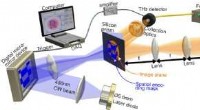
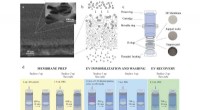
The microfluidic system is a small, chip-based device that uses tiny channels to control the flow of fluids. The system can be programmed to separate cells based on their size, shape, or other physical properties.
To separate cells, the microfluidic system uses a process called dielectrophoresis. Dielectrophoresis is the movement of a neutral particle in a non-uniform electric field. The strength of the dielectrophoretic force depends on the particle's size, shape, and electrical properties.
By carefully controlling the electric field, the microfluidic system can separate cells of different sizes and shapes. The system can also be used to separate cells based on their electrical properties.
Applications of the Microfluidic System
The microfluidic system has a wide range of potential applications in the study of infectious diseases. For example, the system could be used to:
* Identify the different cell types that are infected by a novel pathogen
* Study how a pathogen interacts with different cell types
* Develop new treatments for infectious diseases that target specific cell types
The microfluidic system is a powerful new tool that could help scientists better understand how novel pathogens attack the body and develop new treatments for infectious diseases.
Benefits of the Microfluidic System
The microfluidic system offers several benefits over traditional methods of cell separation. These benefits include:
* High throughput: The microfluidic system can process a large number of cells quickly and efficiently.
* Precision: The microfluidic system can separate cells with a high degree of precision.
* Versatility: The microfluidic system can be programmed to separate cells based on a variety of physical properties.
* Low cost: The microfluidic system is relatively inexpensive to fabricate and operate.
The microfluidic system is a promising new technology that has the potential to revolutionize the study of infectious diseases.