1. Nutrient Sources:
- Riverine inputs: Rivers carry a significant amount of nutrients from land into coastal waters. Researchers study how factors like watershed characteristics, land use, and seasonal variations influence the quantity and composition of these nutrients.
- Upwelling: Coastal upwelling events bring nutrient-rich deep water to the surface. Researchers examine the physical processes and environmental conditions that drive upwelling and its impact on nutrient availability.
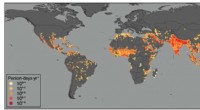
- Dust deposition: Wind-blown dust from deserts and other arid regions can transport essential nutrients like iron and phosphorus to the ocean. Researchers investigate the sources, pathways, and ecological implications of dust deposition.
- Biological nitrogen fixation: Certain microorganisms have the ability to convert atmospheric nitrogen into forms usable by plants. Researchers study the diversity, distribution, and activity of these nitrogen-fixing organisms and their contribution to nutrient cycling.
- Recycling within the food web: Nutrients are also recycled within the marine food web through processes like decomposition and excretion. Researchers investigate the role of different organisms in nutrient recycling and the rates at which these processes occur.
2. Transport Processes:
- Ocean currents: Researchers use physical oceanography techniques to understand how ocean currents transport nutrients and influence their distribution in marine environments.
- Mixing and diffusion: Small-scale mixing processes, such as turbulent mixing and diffusion, play a crucial role in distributing nutrients within the water column. Researchers study these processes using in situ measurements, modeling, and remote sensing techniques.
- Biological transport: Marine organisms can actively transport nutrients through their movements and behavior. Researchers investigate the role of migratory species, zooplankton, and other organisms in nutrient transport.
3. Food Web Dynamics:
- Phytoplankton growth: Phytoplankton are microscopic algae that form the base of the marine food web. Researchers study how nutrient availability, light conditions, and grazing pressure influence phytoplankton growth and productivity.
- Zooplankton grazing: Zooplankton feed on phytoplankton and play a vital role in nutrient cycling. Researchers investigate the feeding behavior, selectivity, and abundance of different zooplankton species and their impact on phytoplankton populations.
- Trophic interactions: Researchers examine the interactions between different trophic levels, including phytoplankton, zooplankton, fish, and higher predators, to understand how nutrient flow affects the structure and dynamics of marine food webs.
4. Ecosystem Modeling:
- Researchers develop mathematical models to simulate nutrient cycling and energy flow within marine ecosystems. These models help in understanding the complex interactions between nutrient sources, transport processes, and food web dynamics.
- Models can be used to predict the effects of environmental changes, such as climate variability, eutrophication, or fishing pressure, on nutrient availability and ecosystem productivity.
By studying the sources, transport processes, and interactions within the marine food web, researchers aim to unravel the mechanisms that sustain the fertility of the sea and ensure the health and resilience of marine ecosystems.