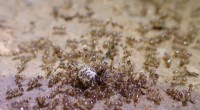
The study's authors arrived at this estimate by extrapolating from ant population data collected at 467 sites around the world. They found that ant populations varied widely depending on factors such as climate, vegetation, and soil type. However, they were able to develop a model that predicted ant populations in areas where no data was available.
The researchers believe that their estimate is conservative, and that there may actually be more than 20 quadrillion ants on Earth. They also noted that ant populations aredeclining in some parts of the world due to habitat loss and climate change.
Ants are important members of the ecosystem, as they play a role in soil aeration, nutrient cycling, and seed dispersal. They also provide food for a variety of animals, including birds, reptiles, and mammals.