Transdifferentiation is the remarkable ability of one type of cell to transform into another, completely different cell type. This phenomenon challenges the traditional view of cell differentiation as a one-way process and opens up new avenues for understanding tissue regeneration and repair.
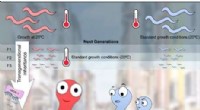
In C. elegans, transdifferentiation occurs during the development of the worm's germline, which gives rise to the gametes (sperm and eggs). The germline originates from a group of cells called the primordial germ cells (PGCs).
1. Induction: The first step in transdifferentiation is the induction of the PGCs. A signal from the somatic cells (body cells) surrounding the PGCs triggers the expression of specific genes that initiate the transition.
2. Proliferation: Once induced, the PGCs undergo rapid proliferation, dividing and increasing in number. This expansion of the germline cell population is essential for the production of sufficient gametes.
3. Migration: Following proliferation, the PGCs undergo migration. They move from the central region of the embryo to the periphery, where they will eventually form the gonad (the reproductive organ).
4. Differentiation: As the PGCs migrate, they begin to differentiate into two types of germ cells: sperm and eggs. This differentiation involves changes in gene expression, cellular morphology, and the acquisition of specialized functions.
The ability of PGCs to transdifferentiate into sperm and eggs is crucial for the worm's reproductive success. Without transdifferentiation, the worm would not be able to produce gametes and would essentially become infertile.
Furthermore, transdifferentiation is not limited to the germline in C. elegans. It also occurs in other tissues, such as the gut, where certain cells can transform into different cell types in response to environmental cues.
The study of transdifferentiation in C. elegans and other organisms provides valuable insights into the plasticity of cell identity and the intricate regulation of developmental processes. Understanding these mechanisms could lead to new strategies for tissue regeneration, cell replacement therapies, and the treatment of developmental disorders.