Hydrophobicity is a key factor in determining the structure and function of proteins. It is the tendency of a molecule or molecule group to repel water. Hydrophobic molecules are typically nonpolar, meaning they do not have a net electrical charge. This causes them to be repelled by water, which is polar.
The hydrophobic effect is a major driving force in protein folding. Proteins are composed of a chain of amino acids, each of which has a side chain with a specific chemical structure. Some side chains are hydrophobic, while others are hydrophilic (water-loving). The hydrophobic side chains tend to cluster together in the interior of the protein, away from the water. This helps to stabilize the protein's structure and prevent it from denaturing.
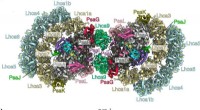
Hydrophobicity also plays a role in protein-protein interactions. Proteins that have complementary hydrophobic surfaces can bind to each other, forming complexes. This is how proteins assemble into larger structures, such as enzymes, ion channels, and cell membranes.
The hydrophobic effect is a fundamental property of proteins that has a profound impact on their structure and function. By understanding how hydrophobicity shapes protein assemblies, we can gain a better understanding of how proteins work and how they interact with each other.
The understanding of how hydrophobicity shapes protein assemblies has led to a number of applications in protein engineering. For example, scientists can design proteins with specific hydrophobic properties to improve their stability, solubility, or ability to interact with other molecules. This has led to the development of new drugs, enzymes, and materials.
Hydrophobicity is also a key factor in the design of self-assembling proteins. These proteins are able to spontaneously form into complex structures without the need for external guidance. This has led to the development of new materials, such as biomimetic membranes and protein-based nanoparticles.
The applications of hydrophobicity in protein engineering are still being explored, and it is likely that we will see even more advances in this field in the years to come.
Hydrophobicity is a fundamental property of proteins that has a profound impact on their structure and function. By understanding how hydrophobicity shapes protein assemblies, we can gain a better understanding of how proteins work and how they interact with each other. This knowledge can be used to design new proteins with specific properties, which has a wide range of applications in medicine, biotechnology, and materials science.