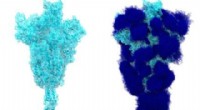
Aβ is a peptide that is produced naturally by the body. However, in people with Alzheimer's disease, Aβ clumps together and forms plaques in the brain. These plaques are thought to interfere with communication between brain cells and eventually lead to the symptoms of Alzheimer's disease, including memory loss, cognitive problems, and difficulty with language and movement.
The new study shows that Aβ can enter brain cells through a receptor called the "transient receptor potential cation channel subfamily A member 1" (TRPA1) channel. TRPA1 is a channel that is normally activated by harmful stimuli, such as heat and cold. However, the study found that Aβ can also bind to TRPA1 and cause the channel to open, allowing Aβ to enter the brain cell.
The study's findings suggest that TRPA1 may be a new target for the treatment of Alzheimer's disease. By blocking TRPA1, it may be possible to prevent Aβ from entering brain cells and forming plaques.
"Our study provides new insight into how amyloid beta enters brain cells, and it suggests that targeting TRPA1 could be a potential therapeutic strategy for Alzheimer's disease," said Dr. Brian Cummings, the lead author of the study.
The study was funded by the National Institutes of Health (NIH).