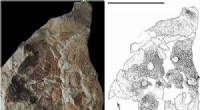
The Chengjiangocaris fossil is significant because it preserves the details of the animal's body plan, including its segmented body, jointed appendages, and a pair of antennae. These features are similar to those found in modern insects, spiders, and crabs, suggesting that these animals share a common evolutionary ancestor.
Prior to the discovery of the Chengjiangocaris fossil, scientists had proposed various theories about the origins of modern insects, spiders, and crabs. Some believed that these animals evolved from a group of primitive crustaceans, while others suggested that they evolved from a group of worm-like animals.
The Chengjiangocaris fossil provides strong support for the theory that modern insects, spiders, and crabs evolved from a worm-like ancestor. This discovery helps to fill a gap in our understanding of the evolutionary history of these animals and provides insights into the origins of some of the most diverse and successful groups of animals on Earth.
The Chengjiangocaris fossil was discovered in the Chengjiang Formation in China's Yunnan Province. The Chengjiang Formation is a UNESCO World Heritage Site and is known for its rich fossil deposits, which have yielded a wealth of information about the early evolution of animals.