Evolution is driven by a number of factors, including:
* Natural selection: This is the process by which individuals with the most favorable traits are more likely to survive and reproduce.
* Genetic variation: This is the presence of different alleles, or versions of genes, within a population. Genetic variation is essential for evolution because it provides the raw material for natural selection to act upon.
* Time: Evolution is a slow process that occurs over long periods of time. This is because it takes many generations for natural selection to produce significant changes in a population.
The theory of evolution is one of the most important and well-supported theories in science. It has revolutionized our understanding of the natural world and our place in it.
How Evolution Works
Evolution occurs when some individuals in a population have traits that are better suited to their environment than others. These individuals are more likely to survive and reproduce, passing on their traits to their offspring. This process is called natural selection.
Natural selection is the driving force behind evolution. It explains how populations of organisms can change over time, adapting to their environments and becoming better suited to survive and reproduce.
Evolution is a gradual process. It occurs over many generations as natural selection continuously removes less-fit individuals from a population and allows better-fit individuals to thrive and reproduce.
The Power of Natural Selection
Natural selection is a powerful force that can lead to significant changes in a population over time. This is because even a small advantage in terms of survival or reproduction can make a big difference over many generations.
For example, suppose that there are two populations of mice living in the same environment. The mice in one population have slightly longer tails than the mice in the other population. The long tails provide some protection from predators, so the mice with longer tails are more likely to survive and reproduce.
Over many generations, the population of mice with longer tails will become larger and the population of mice with shorter tails will become smaller. This illustrates the power of natural selection even a small advantage can make a big difference over time.
The Importance of Genetic Variation
Genetic variation is essential for evolution. This is because natural selection can only act on the traits that are present in a population. If there is no variation, then there is nothing for natural selection to act upon.
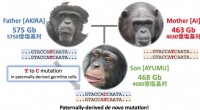
Genetic variation arises from mutations, which are random changes in DNA. Mutations can create new alleles, which are different versions of genes. New alleles can provide new traits that can be acted upon by natural selection.
The more genetic variation there is in a population, the greater the potential for evolution to occur. This is why populations that are small and isolated tend to evolve more slowly than populations that are large and interconnected.
The Importance of Time
Evolution is a slow process. It occurs over many generations as natural selection continuously removes less-fit individuals from a population and allows better-fit individuals to thrive and reproduce.
The amount of time required for evolution to occur varies depending on the strength of natural selection and the amount of genetic variation in a population. In some cases, evolution can occur very quickly especially when there is strong selection pressure and a lot of genetic variation. In other cases, evolution can occur very slowly especially when there is weak selection pressure and little genetic variation.
The Evidence for Evolution
There is a wealth of evidence that supports the theory of evolution. This evidence includes:
* The fossil record: The fossil record shows that organisms have changed over time. For example, the earliest known horses were small, dog-sized animals that lived in forests. Over time, horses evolved to become larger, faster, and better adapted to living in open grasslands.
* Comparative anatomy: Comparative anatomy compares the anatomies of different organisms to find similarities and differences. For example, the skeletons of humans and chimpanzees are very similar, which suggests that we share a common ancestor.
* Molecular biology: Molecular biology studies the structure and function of molecules. For example, the DNA of different organisms can be compared to find similarities and differences. The more similar the DNA of two organisms is, the more closely related they are.
* Biogeography: Biogeography studies the distribution of organisms on Earth. For example, the distribution of certain plants and animals can be explained by the theory of evolution but not by any other theory.
The Significance of Evolution
The theory of evolution is one of the most important and well-supported theories in science. It has revolutionized our understanding of the natural world and our place in it.
Evolution explains how the diversity of life on Earth came to be and why organisms are so well-adapted to their environments. It also explains why some species become extinct while others thrive.
The theory of evolution has had a profound impact on our understanding of the human species. It has taught us that we are descended from a common ancestor with other animals and that we are not the center of the universe.
The theory of evolution is a powerful reminder that we are part of the natural world and that we are subject to the same laws of nature as other organisms.