The theory of evolution was first proposed by Charles Darwin in his book On the Origin of Species, published in 1859. Darwin's theory was based on the following observations:
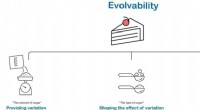
* Variation: Individuals within a population of organisms vary in their traits.
* Inheritance: These traits are passed down from parents to offspring.
* Selection: Individuals with certain traits are more likely to survive and reproduce in a given environment. This is known as natural selection.
Over time, natural selection can lead to significant changes in a population of organisms. For example, a population of rabbits that lives in a snowy environment may eventually evolve to have white fur, which makes them better camouflaged from predators.
The process of evolution is complex and involves a number of different mechanisms, including:
* Natural selection: This is the driving force behind evolution. Individuals with certain traits are more likely to survive and reproduce in a given environment, passing those traits on to their offspring.
* Genetic drift: This is the random fluctuation of allele frequencies in a population. It can occur due to chance events, such as the survival of a small number of individuals during a population bottleneck.
* Mutation: This is the process by which the DNA of an organism changes. Mutations can be caused by a number of factors, including environmental toxins and radiation.
* Gene flow: This is the movement of genes into or out of a population. It can occur through migration, breeding, or the exchange of pollen or seeds.
The process of evolution has led to the diversity of life on Earth. There are estimated to be over 8 million different species of plants and animals on Earth, each of which has evolved to adapt to its specific environment.
Evolution is a continuous process and is still ongoing today. The organisms that we see today are the products of millions of years of evolution, and the process will continue to shape the diversity of life on Earth for years to come.
Here is a simplified flowchart of how evolution works:
Variation -> Inheritance -> Selection -> Adaptation -> Speciation
* Variation: Individuals within a population of organisms vary in their traits.
* Inheritance: These traits are passed down from parents to offspring.
* Selection: Individuals with certain traits are more likely to survive and reproduce in a given environment. This is known as natural selection.
* Adaptation: Individuals with certain traits are better adapted to their environment and are more likely to survive and reproduce.
* Speciation: Over time, natural selection can lead to significant changes in a population of organisms, leading to the formation of a new species.