Jupiterimages/Photos.com/Getty Images
Comets and meteorites have fascinated humanity for millennia, yet modern science reveals that they share many fundamental traits. While a comet appears as a fleeting, luminous trail in the night sky, a meteorite is a tangible rock that can be studied on Earth. Both originate from the same vast interplanetary environment, and their histories intertwine more often than one might think.
A comet is a small celestial body composed mainly of ice, dust, and rocky material. Its nucleus orbits the Sun on a highly elliptical path, and as it approaches the inner Solar System, solar heating vaporizes volatile compounds. This outgassing forms a glowing coma and often a dramatic tail that can span millions of kilometers. Though comets can be seen for only a few days to weeks, their appearance provides a glimpse into the primordial material that formed the planets.
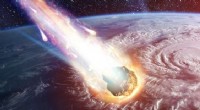
When a meteoroid—a fragment of interplanetary debris—enters Earth’s atmosphere at high velocity, it burns up, producing a bright streak of light known as a meteor or “shooting star.” The majority of meteoroids originate from cometary tails or the collisional debris of asteroids. Their fleeting glow offers clues to the composition and dynamics of the outer Solar System.
Occasionally, a meteoroid is large enough or composed of sufficiently robust material to survive atmospheric passage and reach the ground. These surviving fragments, called meteorites, are classified as stony, iron, or stony‑iron and provide direct samples of extraterrestrial geology. While some meteorites may derive from cometary material, the vast majority are remnants of asteroids or, in rare cases, volcanic ejecta from other planetary bodies.
Comets and meteorites both originate from interplanetary space and orbit the Sun, often on elongated trajectories. Their compositions—icy, dusty, and rocky—reflect the building blocks of planetary formation. Although meteorites are generally too fragile to survive atmospheric entry if they are cometary, the occasional comet‑derived meteorite reminds us that these two phenomena are linked by common origins and shared cosmic processes.