Comstock/Stockbyte/Getty Images
Venus closely matches Earth in both mass and size, and it is the planet nearest to our own. However, the two worlds differ dramatically: Venus spins in reverse, its atmosphere is a toxic, crushing blanket, and surface temperatures are high enough to melt lead. Most of our knowledge of Venus’ surface comes from radar mapping missions such as NASA’s Magellan spacecraft.
Venus is a terrestrial planet composed of rocky material, much like Earth. It formed in the inner Solar System by accreting planetesimals that orbited the young Sun. The planet’s slow, retrograde rotation—one full turn every 243 Earth days—remains a mystery. Scientists Alexandre Correira and Jacques Laskar have suggested that tidal forces from the Sun slowed Venus’ spin until it reversed direction, or that the poles are simply oriented opposite to Earth’s.
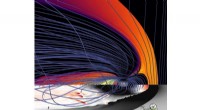
The planet’s sluggish rotation is believed to contribute to its feeble magnetic field, which is only about 15 millionths as strong as Earth’s. Without a robust magnetosphere, solar winds likely stripped light water molecules from Venus’ upper atmosphere, leaving behind a dense, CO₂‑rich envelope that generated a runaway greenhouse effect. The result is a world with atmospheric pressure roughly 90 times that of Earth’s and global temperatures reaching 465 °C (870 °F).
Venus’ thick cloud deck of sulfuric‑acid droplets reflects sunlight efficiently, making it the brightest non‑lunar body in the night sky. The Magellan mission mapped 98 % of the surface in the 1990s using radar, revealing a landscape of mountains, plains, and thousands of volcanoes with extensive lava flows. It also identified unique structures called coronae—ring‑like formations 155–580 km (95–360 mi) wide—believed to form when hot material rises and deforms the crust.
With a mean radius of 6,051 km (3,760 mi) and a mass of 4.87 × 10²⁴ kg (10.73 × 10²⁴ lb), Venus is only slightly smaller than Earth. At their closest approach, the two planets are 38 million km (23.6 million mi) apart, the smallest separation between any pair of planets in the Solar System. At that distance, Venus’ apparent magnitude is –4, brighter than Jupiter (–2) but dimmer than the full Moon (–13) and Sirius (–1).