By Joseph Nicholson | Updated March 24, 2022
A solar prominence is a luminous extension of plasma that rises from the Sun’s chromosphere into the corona. These structures can span tens of thousands of miles; the most extensive prominence recorded in 1997 stretched over 200 000 miles—roughly 28 times Earth’s diameter. Though a prominence can form in about a day, it may persist for several months. Despite being composed of ionized gas rather than solid material, a typical prominence contains around 100 billion tons of mass.
Prominences are tightly linked to solar flares, sudden releases of magnetic energy that accelerate charged particles to near-light speeds. When a prominence destabilizes, it often erupts as a coronal mass ejection (CME), expelling billions of tons of plasma into interplanetary space.
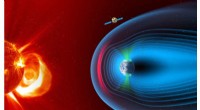
Solar flares pose the most immediate threat to our planet. The Sun’s magnetic field normally shields Earth from high‑energy radiation, but X‑ray and ultraviolet bursts from a flare can penetrate that defense. The influx of high‑energy protons travels from the Sun to Earth in minutes to a few hours, and can disrupt radar, long‑range radio, and satellite communications.
In 2003, a powerful flare disrupted a Japanese satellite. The intense proton flux produced noise that overwhelmed the satellite’s sensors. Similarly, the 2005 event—one of the largest flares recorded—caused a complete blackout of high‑frequency radio across the sun‑lit hemisphere, severing GPS signals and satellite‑TV reception over the United States.
CME impacts are even more severe. A fast CME can alter satellite trajectories and jeopardize orbital stability. When CMEs are strong, the resulting shockwave can expose astronauts to elevated radiation levels. In 2005, U.S. crew members on the International Space Station sought refuge in the more heavily shielded Russian module during a solar storm.
Solar activity also produces Earth’s most spectacular lights. The aurora borealis occurs when solar wind particles are funneled by the planet’s magnetosphere toward the poles, generating shimmering curtains of color that are most vivid during a flare or prominence event.
Understanding solar prominences and their related phenomena is essential for protecting our technology and ensuring the safety of space‑faring humans.