By Leslie Renico
Updated Mar 24, 2022
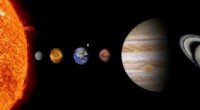
Crafting a physical asteroid belt model provides students with a hands‑on way to understand the scale of the solar system, the spacing of planets, and the sheer abundance of small bodies between Mars and Jupiter.
Mark the Sun on your paper. Place it in the center for concentric orbits, or at the left or right edge for semicircular paths. Outline the Sun and color it yellow.
Add the planetary orbits and position each planet on its orbit, assigning a distinct color to each. While a true scale is impossible on a single sheet, you can use proportional distances. For example, if the distance from the Sun to Mercury is 20 inches, then
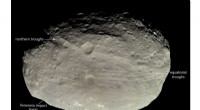
Within the belt zone, draw a large circle to represent an asteroid. Leave ample space so the asteroid appears distinct and not like a wall of rock.
Draw a simple “X” inside the circle as a guide. The lines should cross near the center but not exactly; real asteroids rarely exhibit perfect symmetry. Ensure the angles are right (90°).
Sketch four or five craters on the asteroid. Craters can resemble irregular shapes—cloud‑like, potato‑shaped, or irregular—without adding animal features. Use your imagination to depict varied impact sites.
Add small circles and bumps across the asteroid’s surface to illustrate a rugged terrain. Shade within craters to create a sense of depth.
Erase the guide lines and color the asteroid. Typical asteroid hues range from dark orange and brown to charcoal gray. Repeat steps 3–7 for each asteroid you wish to include.